
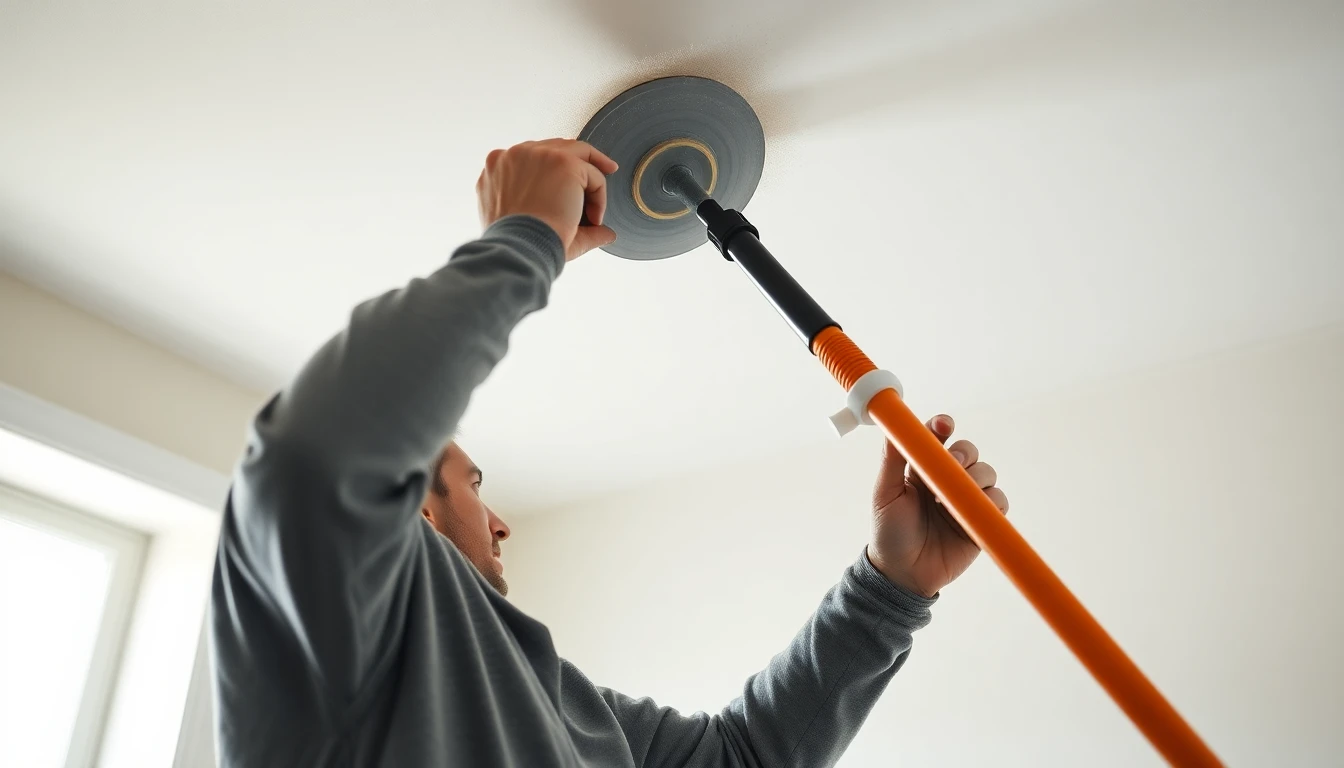
Drywall dust is some of the finest dust in any trade. It floats for hours. It coats every flat surface in the room. It hides inside electrical boxes and HVAC vents. Worst of all, it carries crystalline silica and gypsum particles small enough to reach deep into your lungs.
A pole sander plus a HEPA shop vac is the standard fix. The catch is the hose connection. Every drywall sander brand uses a different port size. Every shop vac hose is a different inside diameter. The duct-tape patch fails halfway through the first room. This guide covers the major drywall sanders, the right shop vac picks, and the printed PETG adapter that connects them.
Be clear on what the adapter does. A GulpDust adapter connects the sander hose to your vac hose. That is all it does. It is not a shroud. It is not a filter. It does not make your setup OSHA compliant. It does not set the airflow, the filter grade, or the respirator the job needs. Those parts are on you. Drywall dust carries silica, so check them before you sand.
Drywall Pole Sander Dust Collection
Pole sanders are the standard tool for full-room work. The head sits on a 4 to 6 foot pole. The shop vac hose runs up the pole to a port at the head. The motor and bag (if there is one) live at the head or at the base.
Three common sizes show up on jobsites:
- 5 inch heads: Standard for ceilings and walls. Light, easy to swing. The Festool Planex LHS 225 and the DeWalt DCE800 both use a 5 inch head.
- 6 inch heads: Faster on big walls. Heavier on the arms. The Festool Planex 2 LHS 2 225 uses a 6 inch head.
- 9 inch heads: Floor-edge sanders and triangle corner sanders. Different category, but the same dust collection rules apply.
Capture on a pole sander is strong when the vac pulls at least 130 CFM at the hose end and the adapter holds a snug fit. Drop below 130 CFM and the brush skirt at the head lifts off the surface and dust spills.
Electric Drywall Sander Dust Connection
Most modern drywall sanders are electric or cordless. The motor is at the head, the cord or battery runs down the pole, and the dust port is in line with the cord. Hand-held drywall sanders are also out there for tight corners, stairwells, and patch work.
The dust port sits at the back of the head on most models. It is angled so the hose pulls away from the work surface. The port size depends on the brand. The next three sections cover the big three.
Festool Planex Drywall Sander Setup
The Festool Planex line is the pro pick. Two main models: the LHS 225 (corded) and the Planex 2 LHS 2 225 (corded with brushless motor). Both pair with a Festool CT 26 or CT 36 dust extractor.
Festool Planex LHS 225
The LHS 225 uses a 36mm Plug-it dust hose. The hose has a proprietary Festool boss that locks into the CT vac with a quarter turn. If you own a Festool CT, the connection is plug and play. If you do not, the 36mm hose end does not fit any standard US shop vac hose without an adapter.
Festool Planex 2 LHS 2 225
The Planex 2 keeps the 36mm Plug-it system but adds a brushless motor and a better balance feel. Same hose, same connection, same need for an adapter to mate to a non-Festool vac. The Planex 2 also has an auto-clean filter pulse that helps maintain suction on long jobs.
Connecting a Festool Planex to a Standard Shop Vac
The standard fix in the trade is a 36mm Festool hose to 2-1/2 inch step adapter. Printed PETG holds a snug fit under pole vibration; an aftermarket plastic step often pulls free at the boss. See our full hose size guide for the size chart.
For the broader Festool tool list including port specs on each model, check our brand reference (Festool brand pages are being added; see related guides for now).
DeWalt DCE800 Drywall Sander Dust Connection
The DeWalt DCE800 is the 20V MAX brushless cordless drywall sander. It came out in 2022 and quickly took share from corded units because the cord on a pole is a real safety issue near edges and stairs.
DCE800 Port Size and Hose Pairing
The DCE800 dust port is on the 1-1/4 in. port hub. It is built for the DeWalt DWH800 cordless dust extractor or a corded DWV012. Both DeWalt vacs match it at the hose end. Pair them and the joint holds with no adapter.
Connecting the DCE800 to a Non-DeWalt Shop Vac
If you run a Ridgid, Shop-Vac, or generic 2-1/2 inch hose, you need to step from 32mm at the sander port down to your hose ID. A printed PETG adapter sized for the DCE800 boss and your hose ID closes the gap. See all DeWalt tools we track for the DCE800 port spec.
Milwaukee M18 FUEL Drywall Sander Setup
The Milwaukee M18 FUEL drywall sander (model 2841-20) runs on the M18 battery line. It uses a 32mm AirLock hose port. The AirLock system locks the Milwaukee 0882-20 M18 FUEL shop vac hose with a twist.
If you do not own the M18 FUEL vac, the AirLock boss does not fit any standard hose. A printed PETG adapter sized for the AirLock boss and your shop vac hose ID is the only path. Most aftermarket AirLock adapters are sold for grinders, not sanders, and the sander port has a slightly different boss geometry. Worth measuring. See all Milwaukee tools we track.
Hyde and Generic Pole Sander Vacuum Adapters
Not every drywall sander is a Festool or DeWalt. The Hyde Pivot 235, the WORX WX820L and a handful of import models spread across two of the common sizes. They were built to pair with whatever shop vac the contractor already owned.
The trouble is "whatever vac the contractor owned" is rarely the same brand as the sander. Three common combos:
- Hyde Pivot + Ridgid shop vac: 32mm sander port to 2-1/2 inch hose. Needs a step adapter.
- WORX sander + Shop-Vac brand 5-gallon vac: 35mm sander port to 1-7/8 inch hose. Needs a step in the other direction.
- Import sander plus a Festool CT: awkward by design. The Festool Plug-it port is smaller than the sander port.
Drywall Sanders We Build Adapters For
Here is the drywall sander lineup, brand by brand, with the hose each one ships with.
| Brand | Model | Native Hose |
|---|---|---|
| Festool | Planex LHS 225 | Festool CT |
| Festool | Planex 2 LHS 2 225 | Festool CT |
| DeWalt | DCE800 | DWH800 or DWV012 |
| Milwaukee | 2841-20 (M18 FUEL) | 0882-20 |
| Hyde | Pivot 235 | Universal |
| WORX | WX820L | Universal |
Each sander lands on one of the port size hubs. Pick yours and we build the adapter for it.
None of the brand-native combos work across brands. A printed PETG adapter sized for your port and hose closes the gap.
HEPA Shop Vac Picks for Drywall Dust
Drywall dust is finer than most workshop dust. A standard shop vac filter blows the fines back into the room. Three things matter when picking a vac for drywall:
- True HEPA filter: True HEPA captures 99.97% at 0.3 microns. Drywall dust is finer than that on average. A non-HEPA filter blows the worst part right back into the room.
- Long hose: A pole sander reaches 10 to 12 feet above the floor. The hose has to follow. 16 to 25 foot hoses are common on dedicated dust extractors. Shop-Vac brand hoses are usually 7 feet, which is too short for ceilings.
- Auto-cleaning filter: Drywall dust clogs filters in minutes. A vac with an auto-pulse filter cleaner holds suction across a full job. Without one, you stop every 20 minutes to bang the filter.
Top picks: Festool CT 36 AC, DeWalt DWV012, and the Milwaukee 0882-20. All three have HEPA filters and at least 130 CFM. The Festool and DeWalt both have auto-pulse filter cleaners. The Milwaukee does not but compensates with battery portability.
Why Drywall Dust Hurts and Why a Dust Extractor Helps
Drywall dust is a mix of gypsum, joint compound, paper fibers, and trace silica. The gypsum part is mostly inert. The silica part is the problem. Crystalline silica scars lungs the same way it does on a concrete jobsite, and the OSHA limit applies. Long-term exposure raises the risk of silicosis and lung cancer.
A pole sander plus a HEPA vac cuts down the airborne silica a lot. The shroud at the head catches dust at the source. The HEPA filter keeps most of it out of the rebreathed air. Most pros still pair this with a half-mask P100 respirator, because collection alone does not make the air safe to breathe.
For more on fine-dust strategy across MDF, plywood, and gypsum, see our MDF and plywood dust collection guide. The same hose + adapter logic applies to a table saw or router cutting drywall-grade composites.
Why PETG Beats PLA for Drywall Sander Adapters
A drywall sander runs cool compared to a grinder. The motor is small, the work is light. So heat is not the main concern. The main concern on a sander adapter is fit and impact.
A pole sander gets dropped. Lifted by the hose. Banged into door frames. The adapter at the hose joint takes more abuse than most workshop adapters. PLA cracks at room temperature when it takes a hard knock. PETG flexes and recovers. After 50 jobs, a PETG adapter still holds snug; a PLA adapter has a hairline crack.
PETG also shrugs off the joint-compound dust that ends up packed into every crevice. For the full material breakdown, see why we use PETG for dust collection and why GulpDust adapters are PETG, not PLA or ABS. For the cordless side of brand-specific dust collection, see our cordless dust collection guide.
Drywall dust collection works when three parts line up. The pole sander matches the head size. The vac pulls HEPA-rated air at 130 CFM or more. The hose connects with a snug fit. The pole and the vac are usually fine. The hose is where most setups fail. A printed PETG adapter closes the gap.
If you tell us your drywall sander brand, model number, and shop vac hose size, we will print you the adapter that connects them. Made in the USA, printed to order and shipped from the USA.