
Shop vac and vacuum hose adapter size guide
Know your size? Start here
Find the adapter that fits your tool
Skip the chart if you want. Pick your tool and your vac, and we match the sizes for you.
Dust port and hose sizes in millimeters and inches
Sizes are named by the inside width. The outside is a few millimeters bigger because the wall has thickness. Match the size you measured, then click through for every tool that uses it.
- 27mm27mm innerSee the tools this size covers
- 1-1/4 in.31.75mm innerSee the tools this size covers
- 35mm35mm innerSee the tools this size covers
- 36mm36mm innerSee the tools this size covers
- 1-1/2 in.34.9mm inner, 38.1mm outerSee the tools this size covers
- 1-7/8 in.47.6mm innerSee the tools this size covers
- 2 in.50.8mm innerSee the tools this size covers
- 2-1/4 in.57.15mm innerSee the tools this size covers
- 2-1/2 in.63.5mm innerSee the tools this size covers
- 4 in.101.6mm innerSee the tools this size covers
| Size in inches | Size in mm | Tools at this size |
|---|---|---|
| 27mm | 27mm | See the list |
| 1-1/4 in. | 31.75mm | See the list |
| 35mm | 35mm | See the list |
| 36mm | 36mm | See the list |
| 1-1/2 in. | 38.1mm | See the list |
| 1-7/8 in. | 47.6mm | See the list |
| 2 in. | 50.8mm | See the list |
| 2-1/4 in. | 57.15mm | See the list |
| 2-1/2 in. | 63.5mm | See the list |
| 4 in. | 101.6mm | See the list |
What size do I need
Type the number you measured, in millimeters or inches, or type your tool model. You get the sizes that match and the pages that carry them.
Why the labels do not match
A vacuum hose adapter joins two parts that were not made to fit. One end grips the dust port on your tool. The other end grips your shop vac hose. With the right adapter the connection holds, so more dust ends up in the vac and less in the air you breathe.
Shop vac hoses come in three main sizes. Full-size US shop vacs use a 2-1/2 in hose, which is 63.5mm. Many mid-size vacs use 1-7/8 in, which is 47.6mm. Small cordless vacs often use 1-1/4 in, which is 31.75mm.
Find both of your sizes in the chart above. Then order the one adapter that bridges them, so you stop taping hoses together.
Why the labels do not match
A vacuum hose adapter joins two parts that were not made to fit. One end grips the dust port on your tool. The other end grips your shop vac hose. With the right adapter the connection holds, so more dust ends up in the vac and less in the air you breathe.
Shop vac hoses come in three main sizes. Full-size US shop vacs use a 2-1/2 in hose, which is 63.5mm. Many mid-size vacs use 1-7/8 in, which is 47.6mm. Small cordless vacs often use 1-1/4 in, which is 31.75mm.
Find both of your sizes in the chart above. Then order the one adapter that bridges them, so you stop taping hoses together.
What size is a shop vac hose
Most full-size US shop vacs use a 2-1/2 in hose. That is 63.5mm across the inside. Mid-size vacs from the common US brands often use a 1-7/8 in hose end, which is 47.6mm. Small cordless vacs use 1-1/4 in, which is 31.75mm.
Dust extractors are different. The Festool CT line and similar machines use a 27mm hose end. That is why a shop vac adapter and a dust extractor adapter are not the same part.
Not sure which one you have? Measure the open end of your hose in millimeters and match it in the chart above. When in doubt, measure. It takes one minute and saves a return.
What fits your power tool
Every brand picks its own dust port, and the port often changes between models inside one brand. We did that homework already. Pick your tool in the finder and we hand you the adapter built for it.
Browse every tool brand we cover, or open the adapter finder and pick your tool and your vac.
Common tool to shop vac adapter setups
These are the size pairs we print most. Each one is a single adapter, no tape and no clamps. Tap one to open it with both sizes filled in.
- Cordless tool port 1-7/8 in shop vac hoseThe most common cordless tool to shop vac pairing
- Festool tool port 1-7/8 in shop vac hoseRun Festool tools on a regular shop vac
- Random orbit sander port 1-7/8 in shop vac hoseSander ports down to a standard mid-size hose
- Table saw port 2-1/2 in shop vac hoseJobsite table saws to a full-size vac
- 2-1/2 in shop vac hose 4 in dust collection ductTie a vac hose into a central dust system
How to measure your dust port
First look at the port on your tool. Most are an opening you can put a caliper tip inside. Some are a stub that sticks out, the kind a hose slips over. The two need different numbers, so check which one you have before you measure.
If the port is an opening, measure the inside. Put your calipers in the opening and open them until they touch both walls. That inside number is the one our parts are built to, because our adapter goes into the port.
If the port is a stub the hose slips over, measure across the outside of the stub. Our adapters today are male on both ends, so they go into an opening rather than over a stub. That means a stub port may need a different part than the ones we list, so ask us before you order.
Do the same at the vacuum end. Measure the inside of the open hose or duct end. With both numbers written down, the chart and the builder both know what to show you.
No calipers? A ruler in millimeters gets you close. Round to the nearest size in the chart. Measure twice.
See how it seats
You measured your port and you measured your hose. Here is what those two numbers buy you. The picture below is one adapter, cut down the middle, so you can see how it sits inside a hose. Every size we print seats the same way. Only the widths change. The part you get is not cut.
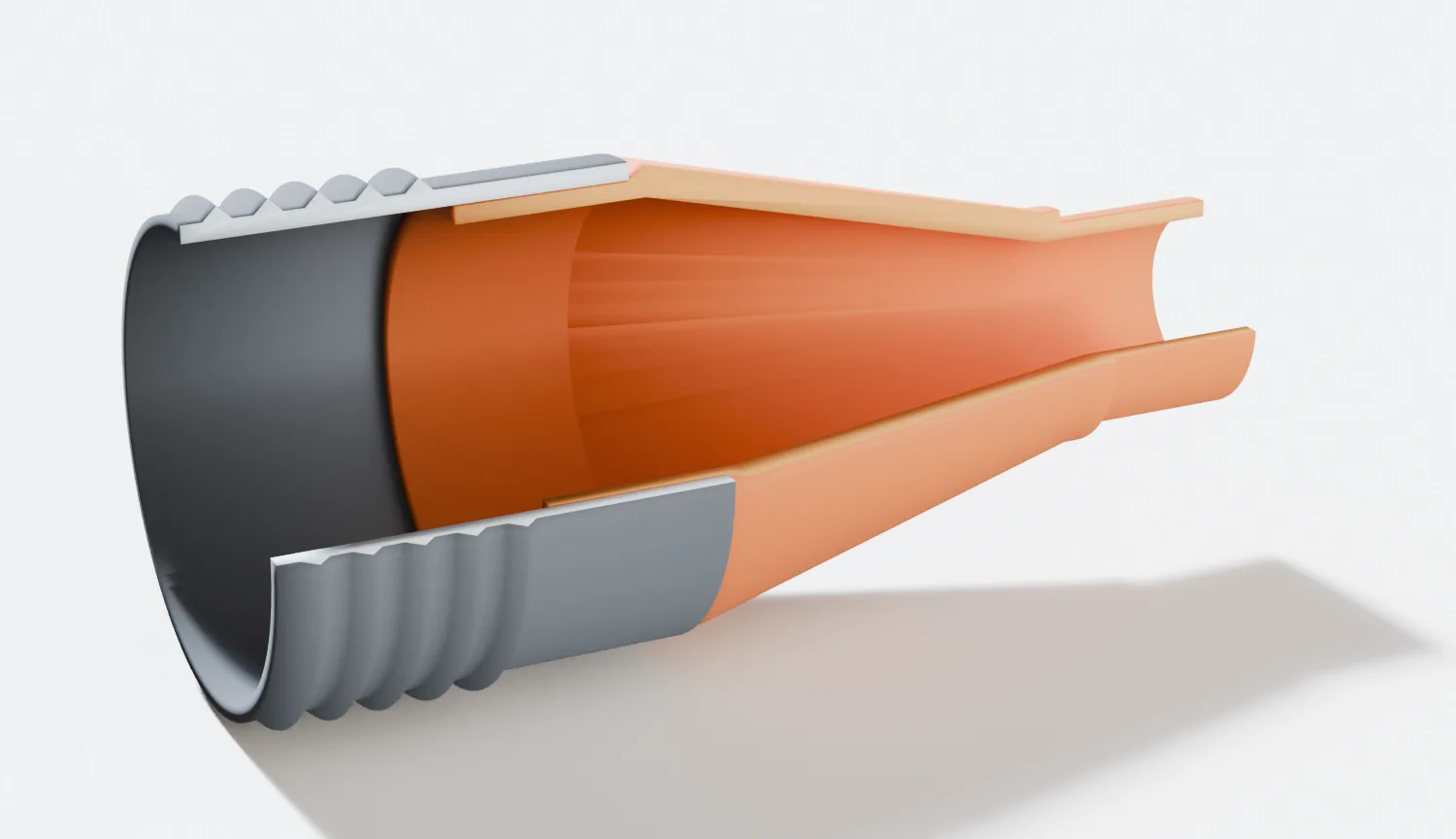
- 01Your hose
- The grey ribbed part. It stands in for any shop hose.
- 02Our adapter
- The orange part. It runs down inside the hose.
- 03About 25 mm in
- The stub slides about 25 mm into the hose. That is the same on every size we make.
- 04A ring stops it
- The stub steps up to a ring wider than the hose. The hose lands on that ring and goes no further.
See the joint up close, and the gap
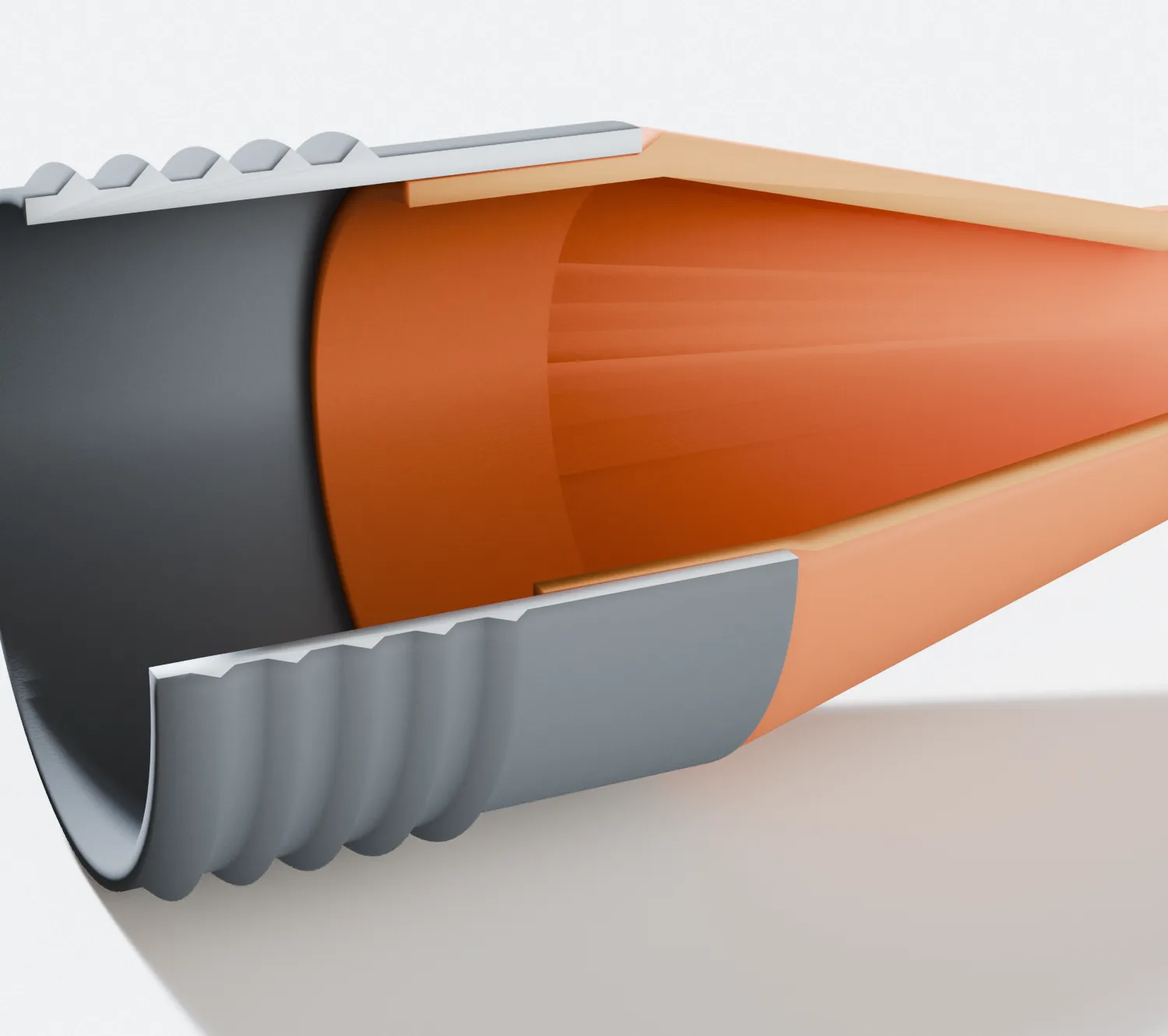
The joint, up close
You can see the orange stub running down inside the grey wall, and you can see the step where it stops. Push the hose on and it lands in the same spot every time.
The hose in the picture is a stand in. Yours will look different on the outside. What matters is the width inside, and that is the number we build to.
The gap you cannot see
Zoom in on the wall and a thin dark line shows up between the two parts. That gap is on purpose. It is what lets the stub slide in by hand.
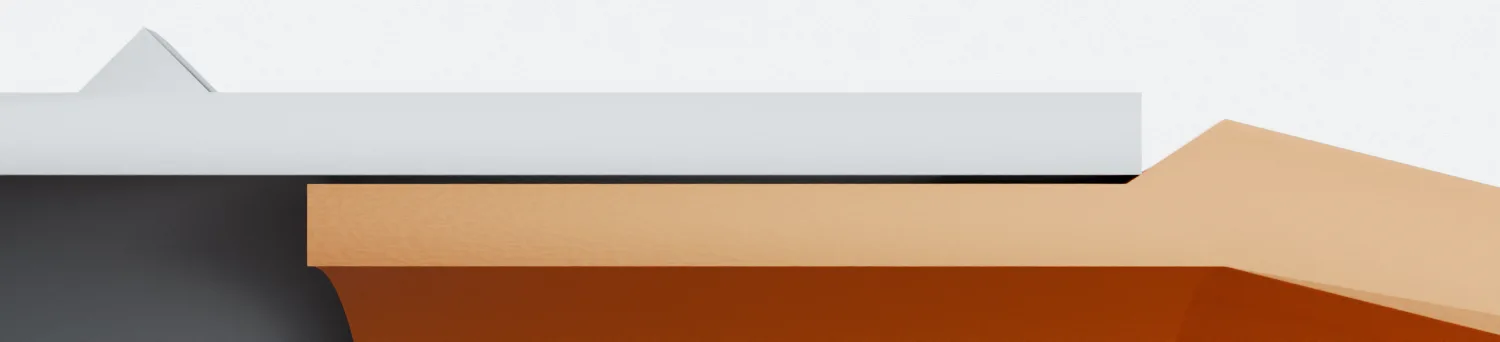
Slide the strip sideways to see all of it.
- Hose wall
- The light band across the top.
- 0.3 mm gap on each side
- The thin dark line under it. It runs the whole way the stub is buried.
- Adapter wall
- The tan band below the line. It is 2.5 mm thick.
- The stop ring
- The step near the right end. That is where the hose lands.
- The buried tip
- At the far left the tan band runs out. That is the end of the stub, deep inside the hose.
0.3 mm is about as thick as three sheets of paper. Small enough that the connection holds. Big enough that the stub still goes in.
These pictures are made straight from the file we print, so the shapes are the real shapes. They are not photos, and they are not drawings by hand. The colors are picked to keep the two parts apart on screen. Your adapter prints in the color you pick.
The joint, up close
You can see the orange stub running down inside the grey wall, and you can see the step where it stops. Push the hose on and it lands in the same spot every time.
The hose in the picture is a stand in. Yours will look different on the outside. What matters is the width inside, and that is the number we build to.
The gap you cannot see
Zoom in on the wall and a thin dark line shows up between the two parts. That gap is on purpose. It is what lets the stub slide in by hand.
Slide the strip sideways to see all of it.
- Hose wall
- The light band across the top.
- 0.3 mm gap on each side
- The thin dark line under it. It runs the whole way the stub is buried.
- Adapter wall
- The tan band below the line. It is 2.5 mm thick.
- The stop ring
- The step near the right end. That is where the hose lands.
- The buried tip
- At the far left the tan band runs out. That is the end of the stub, deep inside the hose.
0.3 mm is about as thick as three sheets of paper. Small enough that the connection holds. Big enough that the stub still goes in.
These pictures are made straight from the file we print, so the shapes are the real shapes. They are not photos, and they are not drawings by hand. The colors are picked to keep the two parts apart on screen. Your adapter prints in the color you pick.
Shop vac adapter questions
What size is a standard shop vac hose?
The standard hose size on full-size US shop vacs is 2-1/2 in, which is 63.5mm. Many mid-size vacs use a 1-7/8 in hose end, which is 47.6mm. Small cordless vacs often use 1-1/4 in, which is 31.75mm. Measure your hose end.
What is a vacuum hose adapter?
A vacuum hose adapter is a fitting that joins two parts that were not made to fit each other. One end grips the dust port on your tool. The other end grips your shop vac or dust extractor hose. With the right adapter the connection holds, so more dust goes into the vac and less into the air.
How do I measure my tool's dust port?
Check the port shape first. If it is an opening, measure the inside: put your calipers in the opening and open them until they touch both walls. That inside number is the one our parts are built to, because our adapter goes into the port. If it is a stub that a hose slips over, measure across the outside of the stub, and ask us first, because our adapters today are male on both ends and may not suit a stub port.
Are hose sizes measured inside or outside?
It depends on the part, and that is why two things with the same name often do not mate. Measure the inside of any opening, and the outside of any stub. For our adapters the tool side reads from the inside of the port, and the vac side reads from the inside of the hose end. Those are the two numbers the chart and the builder ask for.
Do I need a different adapter for a dust extractor?
Often yes. Dust extractors like the Festool CT line use a 27mm hose end, which is smaller than most shop vac hoses. Our chart lists extractor sizes next to shop vac sizes, so you can match either machine with the same steps.
What if my size is not in the chart?
Use the configurator and pick your tool and your vacuum. We print every adapter to order, so we can match sizes that off-the-shelf rubber adapters skip. If you still cannot find a match, measure both ends and check the nearest port size page for guidance.
Find the adapter that fits your tool
Found your sizes? Pick your tool and your vac, and we print the adapter that bridges them.
Find my adapter